
Greece is easier to enjoy on a small budget than most people think, and the right plan makes it simple. Good Greece tours bring the big sights, a clear schedule, and fair prices together in one package. Smart choices on timing, transport, and food keep the total low without cutting the fun.
This guide shows how to find real value, from what changes the price to which sights cost nothing. We also explain when to travel and how to compare plans. The team at My Greece Tours shares local advice, so you can plan each day with confidence.
Why Do Many Travelers Look For Budget Greece Tours?
Greece sits high on many travel lists because ancient ruins, sunny beaches, and tasty food draw visitors all year. That demand pushes prices up in busy months. Careful travelers therefore look for ways to pay less and still see the best places.
A tour solves a lot of small problems at once, since the route is set, the tickets are handled, and the transport is booked. You spend less time on maps and more time at the sights. That saved effort is part of the value.
Budget travelers also like a clear total, because Greece has many parts, from the capital to the islands to the mainland. Mixing hotels, ferries, and entry fees on your own gets messy fast. A fixed plan shows the full cost before you leave home.
Time is a hidden cost too, since a day lost in a bus station is a day away from the Acropolis. A tour gives each hour a job. You see more in a short stay and get more from every euro.
Group tours spread costs across many people, since one coach, one guide, and one booking serve the whole group. Each traveler pays a smaller share than a private trip would ask. This is the main reason group days cost less.
Local knowledge adds value as well. A good guide knows which roads are slow and which lines are short. Only state-licensed guides are allowed to lead groups inside Greek archaeological sites and museums, and that rule protects both visitors and the sites.
Travelers who like to compare can browse Greece tours and Tours In Greece side by side, and each page shows what a plan includes. That makes the choice easier and the price clearer.
Budget does not mean basic, since many low-cost plans include the same famous sites as pricier ones. The difference lies in hotel level, group size, and extras. Knowing that helps you spend money only where it matters to you.


What Makes Greece Tours Cheaper Or Costlier?
Group size is the first big factor in Greece tours, because a large coach group shares every cost and the price per person drops. A small group or private car gives more freedom and personal time, but it costs more.
Season comes next, since summer brings crowds, full hotels, and high demand, and prices climb with them. Spring and autumn bring calmer streets and softer prices. The same tour costs much less outside peak weeks.
Hotel level changes the total fast. A simple, clean hotel near the metro saves money over a seaside resort, and many travelers only sleep and shower at the hotel anyway. For most plans, a mid-range room is enough.
Meals and entry fees matter too, because some plans include lunch and tickets while others leave them out. A low headline price can hide these extras. Always check what the price covers before you compare two offers.
Length also shapes the price. A day trip costs less in total than a long route, yet longer plans bundle hotels and transport, which lowers the daily rate. Short plans suit tight budgets, and long plans suit travelers who want depth.
Transport style plays a part as well. A coach is the cheapest way to cover long routes, while a private driver costs more but saves time. Ferries to the islands add cost, and fast boats are pricier than slow ones.
For more ways to trim a trip, read these budget tips for Greece visitors, which cover food, lodging, and timing in plain terms. Use them next to a tour plan to keep every day on track.
These five points shape almost every price you will see:
- Group size and style of the tour
- Season and travel month
- Hotel level and location
- Meals and entry tickets included
- Type of transport used
Which Free Sights Can Greece Tours Pair With Paid Days?
Paid days and free days work well together. Spend money on the big ticketed sites with a guide, then fill the gaps with free walks. This mix turns Greece tours into a full trip at a lower total.
Athens has plenty of free sights. The old streets of Plaka, the busy square at Monastiraki, and the leafy National Garden cost nothing to enjoy. Read about free attractions in Athens to build a long list for your open time.
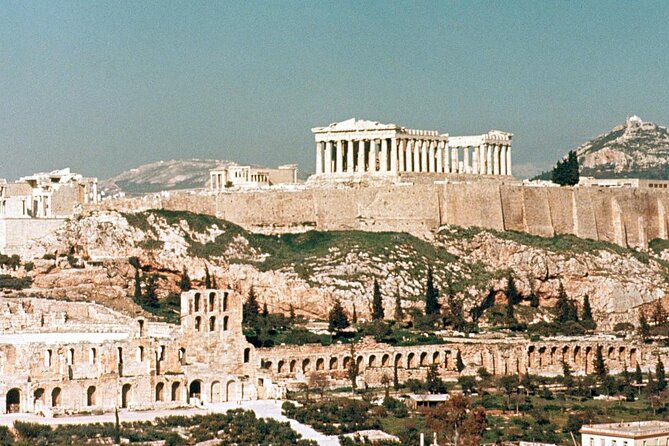
Paid sites are still worth a visit when you pick them with care. Choose the places that mean the most to you, such as the Acropolis, and treat the rest as bonus stops. A guide turns a ticket into a story.
Hills give the best free views. Filopappou Hill faces the Acropolis, and Lycabettus Hill shows the whole city. Both are great at sunset, and neither needs a ticket, so bring water and good shoes.
Syntagma Square offers a free show as well. The ceremonial guards, called Evzones, wear the traditional uniform in front of the parliament. Visitors watch the guard change from the sidewalk at no cost.
Beaches are free across the country, and public sand and swimming spots line the mainland coast and nearly every island. Pack a towel and a snack, and a whole afternoon costs very little.
Villages and churches add free culture. Small squares, old stone lanes, and local chapels welcome walkers, and many sit close to tour stops. You can wander before or after the group moves on.
Some state sites set free entry days, so check the official schedule before you travel and plan around it. If your tour includes a ticketed site, the guide can tell you which nearby spots stay free.


How Do You Save On Transport During Greece Tours?
Transport eats a big part of any travel budget. Greece is long and has many islands, so getting around needs a plan. The right choices keep the cost low and the days smooth.
Athens has a simple public system, and the metro, buses, and trams cover most areas that visitors want to see. Tickets cost far less than taxis. Read about exploring Greece by public transport to learn how it all works.
Walking is the cheapest transport of all. The historic center of Athens is compact, and many top sights sit close to each other. A good pair of shoes does the work of a taxi and shows you hidden corners along the way.
Long-distance buses link most mainland towns, and these coaches are cheaper than rental cars and need no parking. They run from the main bus stations in big cities. Book a seat early in busy months.
Ferries connect the islands, and the type of boat matters. Slow ferries cost less than fast ones, and they take longer, but the open deck and sea breeze add to the fun. Pick a slow boat when time is not tight.
Skip the airport taxi when your hotel is near a metro stop, since the airport has a metro link to the city center. It saves money and avoids traffic. Pack light so you can walk and ride with ease.
A tour that includes transport removes many of these choices. The coach picks you up, drives the route, and drops you back at your hotel. Compare that against your own ticket costs to see which way saves more.
Which Months Give The Best Value On Greece Tours?
Month choice changes the price more than almost anything else. Greece has a busy season and a quiet season, and the gap in cost is large. Pick your dates with care.
Summer is the busiest and costliest time, because beaches fill, ferries sell out, and hotels raise their rates. The heat also tires visitors at open ruins. Many people still love it, but it asks for the biggest budget.
Late spring and early autumn give the best balance. The weather is warm, the sea is inviting, and the crowds are smaller, so tour prices ease down. Read the guide on the best time to visit Greece for weather and crowd detail.
Winter is the cheapest season, because hotels drop their rates and sights have no lines. Some island services slow down, though, and the days are shorter. City and mainland tours stay a smart pick in the cold months.
Holiday weeks raise prices anywhere. Easter is a major festival in Greece, and many locals travel then, so rooms and ferries fill early. Book far ahead or choose another week if you want lower costs.
Shoulder months also help with comfort. Cooler days make long walks around ruins easier, so you see more and tire less. That is real value, even before you count the money saved.




How Do Small Choices Stretch A Greece Tours Budget?
Small choices add up fast. A tour sets the big costs, but you control the daily spending around it. A few smart habits free up money for one more special meal or a boat trip.
Eat where locals eat. Side streets away from famous landmarks have simpler menus and fairer prices. A gyros wrap or a fresh bakery pie makes a filling and cheap lunch. Save sit-down dinners for the evening.
Carry a refillable water bottle, because bottled water near landmarks costs more than you expect. Fill up at your hotel before each day starts. This tiny habit saves money across a whole trip.
Pick a hotel with breakfast included, since a good morning meal keeps you full until the afternoon. Rooms with a small fridge help too, because you can store fruit, yogurt, and snacks from a local market.
Stay near a metro or tram stop. A room slightly outside the busiest zone costs less, and a short ride brings you to the center. Get more ideas in these budget travel tips for Athens.
Keep a small cash reserve for tips and small stops, because some cafes, markets, and rural stands prefer cash. A little cash also helps if a card reader fails. Plan for it so you never pay extra fees at a machine.
How Do You Compare Value Between Greece Tours?
The lowest price is not always the best deal, because value means what you get for what you pay. Two tours with the same price can offer very different days. Compare them line by line.
Start with the list of inclusions. Look for entry tickets, meals, hotel transfers, and a guide, since each item you must buy later adds to the real cost. A longer list at the same price is better value.
Check the guide. A state-licensed guide leads you inside archaeological sites and museums, since the law requires it, and a good one turns old stones into stories. Read reviews to find guides that travelers loved.
Look at group size and pace. A smaller group means more time with the guide and less waiting. A packed schedule looks good on paper but leaves no rest, so pick the pace that suits you.
Ask what is not included. Tips, drinks, and optional add-ons are common extras, and a clear company lists them up front. If an answer is vague, treat that as a warning and look at another plan.
Read the cancellation terms. Plans change, and a flexible booking protects your money. Clear rules also show that the company is honest, so avoid any offer that hides its terms or rushes you to pay.
Use this guide on choosing the right Greek tour as a checklist when you compare. It walks you through style, length, and group type step by step. Then pick the plan that fits your goals and your budget.
Conclusion: Greece Tours On A Budget, Made Simple
Budget Greece tours work best when you know what drives the price. Group size, season, hotel level, and transport shape the total, and free sights and smart daily habits then stretch the money further. Together, these steps keep the trip rich and the cost low.
Compare tours with care, travel in the shoulder months, and use public transport where it makes sense. Then book the plan that fits your goals. Greece rewards travelers who plan a little and stay curious, so pick your dates, set your limit, and start planning today.
Frequently Asked Questions About Greece Tours On A Budget
Are budget Greece tours worth it?
Yes, when the plan covers the sights you care about and the terms are clear. A fair price, a licensed guide, and the right inclusions make a budget tour a smart buy. Compare what each plan includes before you pay.
How can I lower the cost of Greece tours?
Travel in spring or autumn, join a larger group, and pick a simple hotel near public transport. Use buses and the metro on free days instead of taxis. Choose slow ferries when time allows, since they cost less than fast boats.
Do cheap Greece tours cut safety?
A low price does not mean low safety. Trusted operators use licensed guides and follow local safety rules at every price level. Check reviews and ask the company how it keeps groups safe on roads and boats.
Is a guided day better value than going alone?
It is for big ticketed sites, where a licensed guide explains what you see and the transport is handled for you. Free areas like old streets and beaches suit solo walks. Mix both styles to get the best value.
Which month is cheapest for Greece tours?
Winter is the cheapest season overall, since hotels and flights cost less. The days are shorter, though, and some island services slow down. Late spring and early autumn give the best mix of fair prices and good weather.
Are Greece tours cheaper from Athens?
Athens has the most tour choices, so competition keeps prices fair, and many day trips and longer routes start there. Island tours still add ferry costs. Compare the full plan before you decide.
How do group Greece tours keep prices lower?
Group Greece tours keep prices lower by sharing big costs. Hotels, coaches, and guides are booked in bulk, so each traveler pays a smaller part. The saving is real, but it depends on how the group is run.
Why shared costs help Greece tours
A tour company books many rooms at the same hotel for the same nights, and hotels give better rates for steady, planned demand. That lower rate passes on to the traveler as a cheaper bed for the same night.
Coaches work the same way. One driver and one vehicle move the whole group from city to city, so fuel and driver time are split between all seats. A taxi or a rental car for each stop costs far more for each person.
Guides are shared as well. In Greece, only state-licensed guides are allowed to lead groups inside archaeological sites and museums. On Greece tours, that guide fee is split across the group, while a solo visitor who hires a private guide pays it alone.
Meals and local transfers can be grouped too. A set lunch in a family taverna costs a company less when many seats are filled at once. Small savings like these add up across a whole trip and help keep the final price fair.
How group size and tour style change the price
Not every group is the same size. Larger groups usually cost less for each person, while smaller groups give more room for questions and a gentler pace. The small group and private tours on this site show how that trade works.
Escorted Greece tours add another layer, since a tour manager stays with the group and handles check-ins, tickets, and timing. Travelers who want that help can read how to choose escorted tours before they book.
Organizers who plan trips for clubs, schools, or families can read the complete group tour guide. A planned group brings steady numbers, and steady numbers help a company hold the price down. That is why group size is one of the first things to ask about.
Private tours sit at the other end of the scale. They give full control over the pace and stops, but they cost more since few people share the car and guide. Shared Greece tours spread that cost wider.


What hidden costs can raise the price of Greece tours?
Hidden costs in Greece tours include entry tickets, meals, tips, and optional trips that the base price leaves out. These extras can make a cheap tour end up costlier. A careful read of the fine print shows what the price really covers.
What the base price of Greece tours leaves out
Entry fees are the first gap, since many tours list a site visit but do not pay for the ticket. A traveler can check whether the Acropolis multi-site pass is included or must be bought separately.
Meals are the next gap, because a tour can include breakfast only, so lunch and dinner come from the traveler’s own pocket. Bottled water, coffee, and wine also add up at busy tourist spots.
Tips are part of the picture too. Guides and drivers on Greece tours often receive a small tip of thanks at the end of a trip. A short read on cultural etiquette in Greece helps a traveler know what is polite.
Airport transfers and luggage handling are also easy to miss. Some Greece tours cover them, while others charge extra, so a clear list from the company settles the question before payment.
Extras that show up after booking
Optional trips are a common add-on. A boat day, a cooking class, or a wine tasting can be offered on the spot for an extra fee. Each one looks small alone, but together they raise the bill.
Single rooms also cost more on many Greece tours. Companies add a single supplement because a room costs the same for one guest as for two. Solo travelers can ask to share a room and avoid that extra charge.
Timing adds cost as well. Tickets for big sites sell out in busy months, so late buyers lose choice and sometimes pay more. The page on whether to buy Acropolis tickets in advance explains why early planning helps.
Clear answers remove most surprises. Travelers can ask these questions before paying a deposit:
- Which site tickets are included
- Which meals are included
- Whether tips are included
- What a single room costs
- Which trips cost extra
How do Greece tours compare with booking every part alone?
Greece tours trade some freedom for ease and a fair price, while solo booking gives full control but needs more time and planning. The better choice depends on the traveler’s style. Neither path is cheaper in every case.
The time and effort of solo booking
Booking alone means a traveler compares flights, hotels, trains, ferries, and tickets one at a time. Each choice needs research, and a mistake in one step can break the next. That work costs hours, even when it costs little money.
Solo booking also removes the safety net. If a ferry is canceled, the traveler must find a new route and move the room booking alone. On Greece tours, a tour manager solves that problem for the whole group.
Good habits matter on any style of trip. The safety tips for Greece tourists offer simple habits for staying safe, and they apply to solo trips and Greece tours alike. A short read before departure helps a traveler avoid common problems.
Money matters too. Many solo travelers book each part at the lowest price they find, yet fees for changes and late bookings can erase the saving. A bundled price removes much of that risk.
When a tour gives better value than going alone
A tour often wins for first-time visitors, busy people, and anyone who dislikes planning. It bundles transport, rooms, and guides into one price and removes many small choices. For these travelers, Greece tours save both money and stress.
Going alone can win on a slow trip with few stops. A traveler who stays in one town, cooks some meals, and rides local buses can spend less than a tour price allows. The result depends on habits more than on the format.
Walking days make a fair middle path. A guide-led walk through one city adds local knowledge without a full tour. The guide to Greece walking tours shows how to explore on foot at a low cost.
Some travelers mix both styles. They join Greece tours for the busy, hard-to-plan parts, such as major sites, and travel alone for the quiet days. That mix keeps costs fair and leaves room for surprises.
Review habits help too. Reading recent traveler reviews shows whether a company keeps its promises about hotels, guides, and timing. A low price from a weak company is not a saving.
How do ferry choices change the cost of Greece tours?
Ferry choices change the cost of Greece tours through speed, seat class, and timing. Fast boats and cabins cost more, while slower decks and early plans keep the bill lower. Island hopping adds all of these choices to the plan.
Speed, seat class, and boat type
Fast boats cross the water in less time, but they usually cost more than conventional ferries. Conventional ferries are slower and larger, and they carry cars and trucks. The right pick depends on how much time the trip can spare.
Seat class changes the price too. A deck or economy seat costs less than a cabin, which gives a bed on a night crossing. Many Greece tours choose the seats for the group, so the traveler never faces the choice.
The page on Greek ferry booking tips explains routes, seats, and fares in detail. It helps a traveler judge whether the ferry plan inside Greece tours is fair value.
Port choice matters too. Athens has more than one ferry port, and a transfer to the right one is a real cost. Good Greece tours include that transfer in the plan.
Timing, weather, and island routes
Summer sailings are busier, so seats and cabins sell out sooner. Winter sailings run less often, so fewer routes are open. A plan built around the schedule keeps Greece tours on budget.
Wind can delay or cancel ferries. Strong summer winds, called the meltemi, sometimes keep boats in port. A tour with spare time in its plan handles a delay better than a tight solo schedule.
Smart routes also save money. Moving from island to island in a line costs less than returning to Athens between stops. The guide on how to travel between Greek islands compares ferries, flights, and routes.
The tips for ferry travel in Greece prepare a traveler for boarding day. On Greece tours, the guide handles most of that routine, while solo travelers manage it alone.
Budget travelers can also ask a tour company how it handles a missed boat. A good company explains who pays for a new ticket and who rebooks the rooms. That answer shows how much risk the price already covers.


Which Greece tours give good value around Athens?
Shared Greece tours that start in Athens give the best value, since the bus, the guide and the plan share one cost. Athens has the widest choice of Greece tours in the country, so cheaper options are easy to find. The Athens city guide shows how the main areas connect.
Walking Greece tours in Plaka and Monastiraki
Plaka sits below the Acropolis, the ancient hilltop with the Parthenon, and has narrow lanes, small shops and old houses. Walking Greece tours here cost less than coach trips, since no vehicle is needed. The guide does the work on foot, and the group shares the cost.
Monastiraki is a short walk away, with a busy square, a metro stop and a large flea market. One shared route links both areas in a single morning, with time for coffee. Larger groups cost less, while small groups sit in the mid-range and give more time to ask questions.
Many visitors pair the walk with the Acropolis, the rock above the city. A self-guided visit with a good book is the cheaper route. A licensed guide costs more, but the stories bring the stones to life, and the group splits the bill.
Book a walk early in the day, when the streets are cool and quiet. Good tours leave time at the end for a cheap lunch of grilled meat or pastry. Street food in this part of the city is tasty and easy on the wallet.
Greece tours to Cape Sounion and beyond
Cape Sounion is the classic day trip from the capital, along a road that hugs the sea. The Temple of Poseidon stands on a cliff above the water, and the sunset view is famous. Sharing a coach keeps this trip cheaper than hiring a private car.
The public bus along the coast is the cheapest way to reach the cape. Visitors who want a story at the temple can join a short guided visit. Only state-licensed guides lead groups inside Greek archaeological sites and museums, so that part needs a proper booking.
The day trip ideas from Athens list more short outings by bus or boat, all within easy reach of the capital. Compare them with Greece tours from Athens that add lunch and ticket help. Mid-range tours add comfort, while cheaper ones keep the plan simple.
Which Greece tours give good value in the Peloponnese?
Greece tours based in Nafplio give the best value here, because the town sits close to Epidaurus, Mycenae and other major sites. One hotel serves many days, so travellers skip repeated transfers. The roads also reward slow drives, as the guide to scenic drives in mainland Greece shows.
Nafplio as a base for Greece tours
Nafplio was the first capital of modern Greece, and it still feels grand. Its old town has stone lanes, leafy squares and a small sea fort called Bourtzi. Rooms range from cheaper guesthouses to mid-range boutique stays, so most budgets find a fit.
A base in one town beats moving hotels every night. Group Greece tours from Nafplio reach Epidaurus and Mycenae by coach in a short ride, so the evening stays free for dinner. Guests save money on bags, transfers and wasted hours.
Palamidi, the hilltop fort above the town, is a famous climb with a wide view over the bay. The stone steps are steep, but the view rewards the effort. A picnic breakfast on the walls is a cheap and fun start to the day.
Self-drive is another cheap choice for those who like freedom. A rented car shared by a full group costs less for each person, and parking in small towns is simple. Tours that mix a guide with free driving time suit this style well.
Epidaurus, Mycenae and Olympia
Epidaurus has the best-known ancient theatre in Greece, famous around the world for its clear sound. Voices on stage carry to the top rows without help. The Epidaurus guide explains how the site worked as a place of healing.
Mycenae was a rich city in the Bronze Age, when tools were made of bronze. Kings ruled it long before classical times, and its Lion Gate is the best-known sight on the hill. The story of the site is told in ancient treasures unearthed in Mycenae.
Olympia was the home of the first Olympic Games. It lies in the west, so a longer stay or shared Greece tours cost less than a rushed day trip. The Olympia guide helps plan the route, and only state-licensed guides lead groups inside the site.
Which Greece tours give good value on quieter islands?
Greece tours on Naxos, Paros and Syros give the best value, since ferries link them and costs stay lower than on famous islands. Milos and Kythira reward travellers who want even quieter shores. Short ferry hops let a group see several islands without flights.
Naxos and Paros on a fair budget
Naxos is the largest island of the Cyclades, the group of islands in the central Aegean Sea. It has beaches, mountain villages and farms. The size means local buses and shared Greece tours cover a lot, as the Naxos guide shows.
The Portara, a huge marble doorway from an ancient temple, stands by the harbour in the main town. Even a short stop there gives a great view of the sunset. Cheaper plans use the town as a base and take local buses to the beaches.
Paros has the fishing town of Naoussa and the busy port of Parikia. Small boat trips and village walks suit shared groups well. The Paros guide lists the main towns and beaches, so Greece tours there are simple to plan.
Naxos and Paros are close neighbours, so a short ferry ride links them. A base on each island for a few nights costs less than daily moves. Tickets, bags and time all add up when a group changes island every day.
Quiet Greece tours on Syros, Milos and Kythira
Syros has Ermoupoli, a grand town with neoclassical buildings, which copy the style of ancient Greece. Many visitors skip it, so rooms and meals stay mid-range rather than costly. The Syros guide explains the hilltop old quarter.
Milos is known for its white rock coast at Sarakiniko and its boat trips around the island. Group boat tours spread the cost of the boat across many guests. Private boats cost far more, so a shared seat is the smart pick.
Kythira lies south of the Peloponnese and sees fewer crowds than the Cyclades. Slow Greece tours there suit travellers who want quiet villages, calm beaches and cheaper days. Plan the ferry first, since the island sits far from the busy routes.
Which Greece tours give good value in northern Greece?
Greece tours around Thessaloniki, Pelion and Mount Olympus give good value, because the region sees fewer crowds and keeps costs mid-range or lower. The north suits slow travel, good food and long days outdoors. The Thessaloniki guide is a helpful first read.
Thessaloniki city Greece tours
Thessaloniki is the second city of Greece, and it sits on a wide bay. The White Tower is its best-known landmark. A waterfront walk is a cheap start, and shared city Greece tours add the story behind each stop.
The city is rich in Roman and Byzantine history. Byzantine is the name for the eastern Roman empire, which ruled from Constantinople for many centuries. Old churches and walls from that time still stand today.
Food is a big part of value here. Bakeries, grill houses and local markets serve filling meals at cheaper prices than tourist squares. Food walks with a guide sit in the mid-range but offer tastes of many dishes and local stories.
Mountain Greece tours on Pelion and Olympus
Pelion is a green peninsula with stone villages, forests and quiet beaches. In myth it was the home of the centaurs, who were half horse and half man. Self-guided stays here keep costs low, and village life stays calm.
The Pelion villages, such as Makrinitsa, sit on hills above the sea, with stone houses, plane trees and old paved paths. Walking from village to village is cheap and very pleasant. Guided hikes are mid-range, and they add maps, local stories and safe routes.
Mount Olympus is the highest mountain in Greece. In myth it was the home of the gods. The town of Litochoro at its foot is the usual base for walkers and for guided Greece tours into the hills.
Northern Greece rewards slow, simple plans. These habits keep Greece tours there good value:
- Stay in one village for several nights.
- Join a shared group for guided hikes.
- Use the train or bus between cities.
- Eat where local families eat.
- Travel in spring or autumn for lower rates.
How can families keep Greece tours affordable?
Families keep Greece tours affordable by travelling in quieter weeks, choosing a single base for several days, and booking rooms with a kitchen. These habits cut stress as well as cost. Children also cope better when the plan stays slow and simple.
Pick a base that suits children
A family does best when the beds stay the same for several nights. Packing every morning drains money and patience. Towns on Corfu and Lefkada work well, because the beach, the shops and the bus stop sit close together.
Nafplio is another easy base for parents. Its old town is compact, safe to stroll and full of cheap bakeries. Greece tours often pair it with Athens, so the trip starts at a gentle pace.
Athens works well as the first or last stop. Flights land there, and the metro is simple to use. Family Greece tours that mix a short city visit with a long rest by the sea keep travel days short.
Parents who want more ideas can read these family-friendly Greece travel tips before they book. Planning early gives more choice of cheaper rooms. It also keeps the whole budget calm.
Save money on food, sand and sights
Food takes a large share of a family budget. Bakeries, grill houses and market stalls cost less than sit-down restaurants on the waterfront, and children enjoy the simple dishes. A flat with a kitchen covers breakfast and snacks.
Beaches give the best value of any day out. Greek beaches are open to the public, so a towel and a sun hat cost less than hired sunbeds. Naxos and Crete beaches suit children well, and the top beaches in Greece guide helps with the choice.
Choose a single big sight each day and keep the rest free. A morning in Athens, then a swim and an early dinner, keeps young children happy. Good Greece tours for families build in rest time like this.
Family rooms are a smart saving. A single family room usually costs less than separate rooms for parents and children. Tour operators that include family rooms make Greece tours easier to budget.
Grandparents often join family holidays. The island advice for older travellers points to calm places with easy walks. A small bag helps everyone, and these packing light tips keep luggage simple.
How can couples get good value from Greece tours?
Couples get good value from Greece tours by spending on a few special moments, like a sunset view, and saving on everything else. A mid-range room in a quiet town often beats a costlier room beside a busy beach.
Pick the right island and season
Santorini is costlier than most islands, especially near the cliff-top views. Couples who want the same sunsets for less can stay in a quieter inland village and visit the views by bus or taxi. Naxos and Paros offer a mid-range feel with calm villages and long beaches.
Spring and early autumn help the budget too. Rooms cost less, the weather is mild and the sights feel calm. Greece tours that run in these months give couples more space and better prices.
Some couples plan a wedding or a honeymoon. The list of Greece wedding destinations shows places that suit romantic trips. A small ceremony also costs far less than a big party.
Spend on moments, not extras
Pay for a boat ride, a guided sunset walk or a special meal, and skip the rest. A bakery breakfast and a picnic lunch on the sand cost far less than cafe meals. Dinner then feels like a real treat.
Photos are free and last the longest. Good light comes at sunrise and sunset, when crowds thin out. These photography tips for Greece tours help couples keep their memories without paying a photographer.
Quiet places save money as well. Reading about places off the beaten path leads couples to small villages and empty coves. Meals and rooms there cost less than in famous spots.
Smart couples also compare tour styles. A small group tour with set meals gives a mid-range price and removes planning stress. A self-guided trip can cost less if the couple books early, so both kinds of Greece tours deserve a look.
Check what the price includes. Couples comparing Greece tours should look at meals, transfers and entry fees. A cheaper tour that leaves out transfers can cost more in the end.
How can groups of friends share the cost of Greece tours?
Groups of friends share the cost of Greece tours by splitting rooms and transport and agreeing on a budget before the trip. Clear rules stop arguments later. Costs also drop for each person when the group is larger.
Split costs in a fair way
A shared villa or a big flat on Crete or Corfu is cheaper for each person than separate hotel rooms. A taxi or a rental van splits well between friends too. A friend can track costs in a shared phone note so nobody argues later.
Meals are cheaper when shared. Order many small dishes for the table and taste everything, which is how Greek families eat. This guide to Greek food to try helps friends choose dishes worth ordering.
Ferries between islands like Naxos and Paros are a good group cost to split. Book seats together so the group stays side by side. Greece tours for groups often bundle these ferry rides, which saves time at the port.
Plan together and travel lighter
Talk about money early. Some friends want mid-range hotels, while others want cheaper beds. A calm chat before booking Greece tours saves hard feelings later.
Groups work best with simple rules. Agree on the budget, the pace and the must-see places first. Then each friend can skip a paid activity without guilt.
A licensed guide adds real value for groups. Only state-licensed guides may lead groups inside Greek archaeological sites and museums, so many group Greece tours include one for Athens. Sharing the guide’s fee across the group makes it cheaper for each person.
Friends sometimes travel alone and join the group late. These solo travel tips for Greece help that friend feel welcome and safe. Good habits matter too, and this advice on how to explore Greece responsibly helps groups protect the places they visit.
Which places suit budget Greece tours?
Budget Greece tours suit places that sit close together, are easy to reach, and cost little to eat in. The four groups below meet those needs well. Pick one group, then build the whole trip around it to avoid extra travel costs and long transfers between regions.
Mainland
The mainland keeps costs low because roads and rail link the main sights, and no ferry ticket is needed. Greece tours here use coaches and trains, and small towns serve cheap, filling meals. These four places show ancient, Byzantine, and mountain Greece in a few simple trips.
- Delphi is known for its ancient oracle on the slopes of Mount Parnassus.
- Meteora is known for monasteries built on tall rock pillars.
- Mystras is known for its ruined Byzantine hill city near Sparta.
- Pelion is known for green mountain villages and quiet beaches.
Cyclades
The Cyclades cost more in high summer, yet the smaller islands still give good value for money. Greece tours here work best from one base, using local buses and short boat rides between nearby beaches. Rooms and tavernas away from the busy ports keep the daily bill low.
- Milos is known for its pale volcanic rock shores and colorful fishing villages.
- Sifnos is known for its pottery, cooking, and whitewashed hill villages.
- Amorgos is known for a cliffside monastery and deep blue sea.
- Antiparos is known for its large cave and calm, sandy beaches.
Ionian Islands
The Ionian Islands lie off the west coast of Greece and have green hills, calm seas, and long sandy bays. Greece tours here suit travelers who prefer beaches and boat trips over ruins and museums. Lefkada joins the mainland by bridge, so the drive there needs no ferry.
- Corfu is known for its Venetian old town and green countryside.
- Kefalonia is known for Myrtos Beach and the Melissani lake cave.
- Lefkada is known for its white cliff beaches and windsurfing bays.
Dodecanese and Crete
The Dodecanese are a chain of islands near the Turkish coast, and Crete is the largest island in Greece. Greece tours here mix old forts, wide beaches, and relaxed boat days between the islands. Rhodes makes a handy base for day trips to Symi, which keeps the hotel bill low.
- Rhodes is known for its walled medieval old town built by knights.
- Kos is known for its ancient Asklepion healing site and flat bike paths.
- Crete is known for Minoan palaces, deep gorges, and long sandy beaches.
- Symi is known for its pastel harbor houses climbing the hillside.
How do travelers plan Greece tours on a tight budget for one week?
Travelers plan budget Greece tours for one week by choosing one city, one day trip, and one island base. This plan keeps ferry and hotel changes to a minimum. A short route also leaves time to rest, to eat well, and to enjoy each stop without rushing.
Athens on foot
Athens is the best place to start because most of the main sights sit close together. The Acropolis, the Plaka streets, and the Monastiraki market lie within a short walk of each other. Walking costs nothing and shows far more than a bus window.
A guided walking tour keeps Greece tours affordable because it needs no vehicle, and the cost of the guide is shared. Travelers gain history and local tips without a high fee. The one-week Athens, Santorini, and Mykonos itinerary shows how this first stop fits into a full week.
Evenings in Athens cost little too, because travelers can eat at a neighborhood taverna and share a few plates. Walking back to the hotel saves on taxis and keeps the budget steady. Budget Greece tours follow the same rhythm of walking, eating, and resting.
Free sights add even more value. Many hilltops, parks, and old squares charge no fee, and they give strong views at sunset. Travelers save paid entry tickets for the sites they most want to see.
One day trip
A day trip adds history without a hotel change, so the cost of a bed is not repeated. A group coach spreads the fuel and guide costs across many travelers. Several mainland sites from the first section suit this plan well.
Self-guided travelers can make the same trip by bus or train. The self-guided Greece itinerary planning guide explains how to check routes, tickets, and timing. Group Greece tours suit travelers who prefer one set price and a guide.
An early start helps on any day trip, because mornings are cooler and the sites hold fewer people. Early arrival also leaves time for a slow lunch in the nearest village. Travelers return to the city in time for dinner and a well-earned rest.
Packing helps the budget as well. A water bottle, a hat, and a snack from a local bakery replace costly stops near the sites. Travelers keep the savings for a good dinner at the end of the day.
One island base
One island base saves money because the ferry is paid for only once. A small island with local buses and cheap tavernas keeps daily costs down, and beach days and short walks fill the week. Travelers who stay put also avoid the cost of carrying bags between hotels.
The island choice shapes the budget. The top Greek islands guide compares the best-known choices, while the smaller islands listed earlier suit tighter budgets. Travelers pick the island that matches their taste for beaches, hiking, or old towns.
Greece tours that stay on one island also cut the stress of packing. Travelers unpack once, learn the bus times, and eat where locals eat. Slow mornings with coffee by the sea cost little and set the mood. By the end of the week, the island feels like a second home.
Meals on a small island stay cheap when travelers follow local habits. A bakery breakfast, a market lunch, and a shared taverna dinner cost far less than a hotel restaurant. Fresh fruit, bread, and cheese make a simple picnic for any beach day.
Ferries run on set schedules, so travelers check the timetable and book the seat before the trip. Slow ferries cost less than fast boats and give a relaxed view of the sea. The saved money pays for another meal ashore.
More questions about budget Greece tours
Most budget Greece tours share the same basics: a set route, a group guide, and a clear list of what the fee covers. The answers below explain the details.
Do budget Greece tours include meals?
Meals depend on the tour, and the booking page lists exactly which meals the price includes. Budget Greece tours that skip lunch leave time for a local taverna, where simple dishes cost less than at tourist spots. Packing water and snacks saves even more.
Are budget Greece tours suitable for solo travelers?
Yes, budget Greece tours suit solo travelers well because group tours make it easy to meet people and share costs. Guides handle the route and the tickets, so solo travelers never plan alone. Rooms for one person can cost more, so the price list needs a close check.
Can budget Greece tours be booked at the last minute?
Many day tours have open seats close to the date, but popular routes fill fast in summer, so early booking is safer. Multi-day tours and island trips need more notice because hotels and ferries book early. Travelers who book late should check the meeting point and start time first.
Do budget Greece tours include hotel pickup?
Hotel pickup depends on the tour, and many budget tours use a set meeting point to keep the price low. The tour page names the meeting point and any pickup option. Travelers who want pickup choose a tour that lists it, because budget Greece tours add it only when stated.
Is tipping expected on budget Greece tours?
Tipping is not required in Greece, but a small tip for a good guide or driver is welcome. On budget Greece tours, a tip is a sign of thanks and never a duty. Cash works best, and rounding up a restaurant bill is also common.
What should travelers wear on budget Greece tours?
Travelers should wear comfortable walking shoes, light clothes, a hat, and sunscreen, because most sites have little shade. Greece tours that visit monasteries ask visitors to cover shoulders and knees, so a light scarf or long shorts help. A thin jacket suits cool evenings and boat rides.
See more in Biomass Energy:
- Mobile Casino Apps for Canadian Players: A Practical Canadian Guide
- How to Use Free Spins Bonuses: A Practical Canadian Guide
- Step by Step Casino Signup Process: A Practical Canadian Guide
- Responsible Gambling Tips for Canadians: A Practical Canadian Guide
- Progressive Jackpots at Canadian Casinos: A Practical Canadian Guide